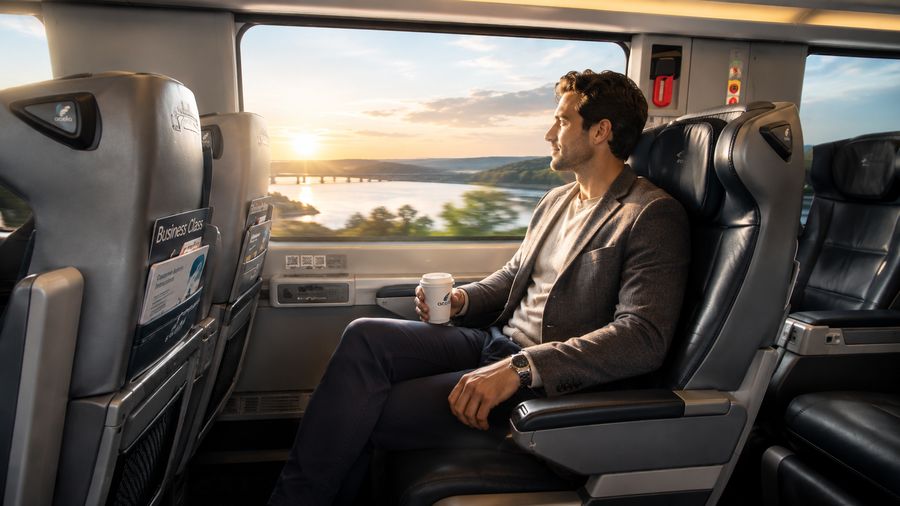
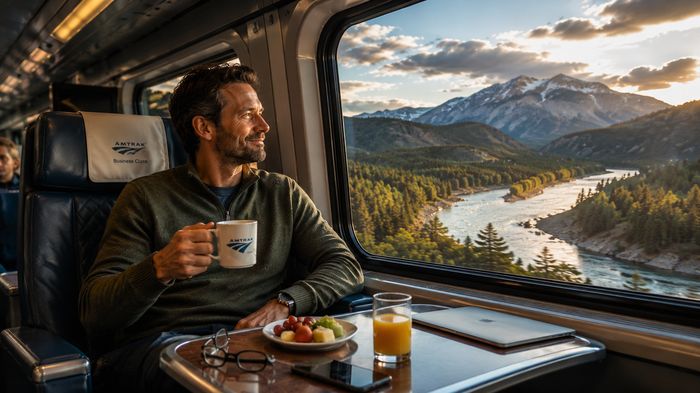
Business Class
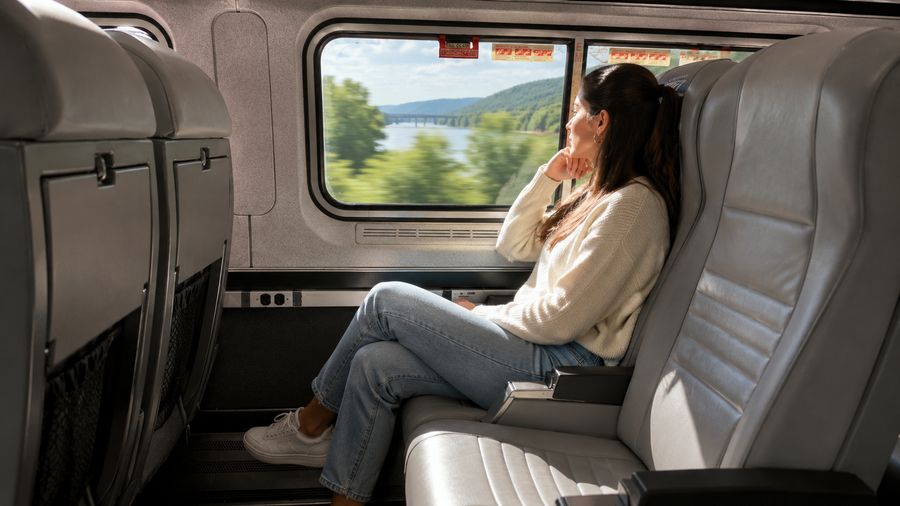
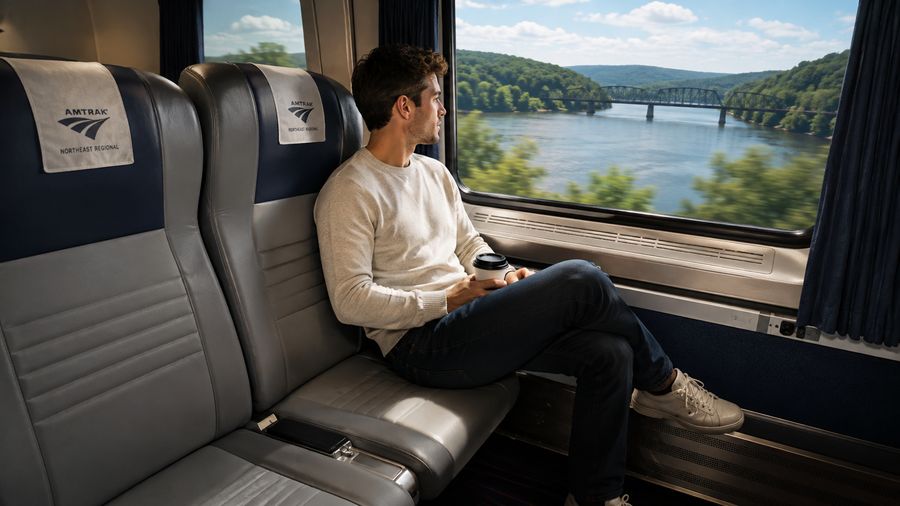
- 2+2 seating with extra legroom
- Café car, power outlets and Wi-Fi at every seat
- Reserved seating at booking
About 190 miles (306 km) point to point — though the train's actual route runs closer to 231 miles (372 km), curving along the Connecticut and Rhode Island shoreline instead of cutting straight across. Typical travel time runs 3h 41m to 4h 30m, between New York Penn Station and Boston South Station / Back Bay.
Book Trains
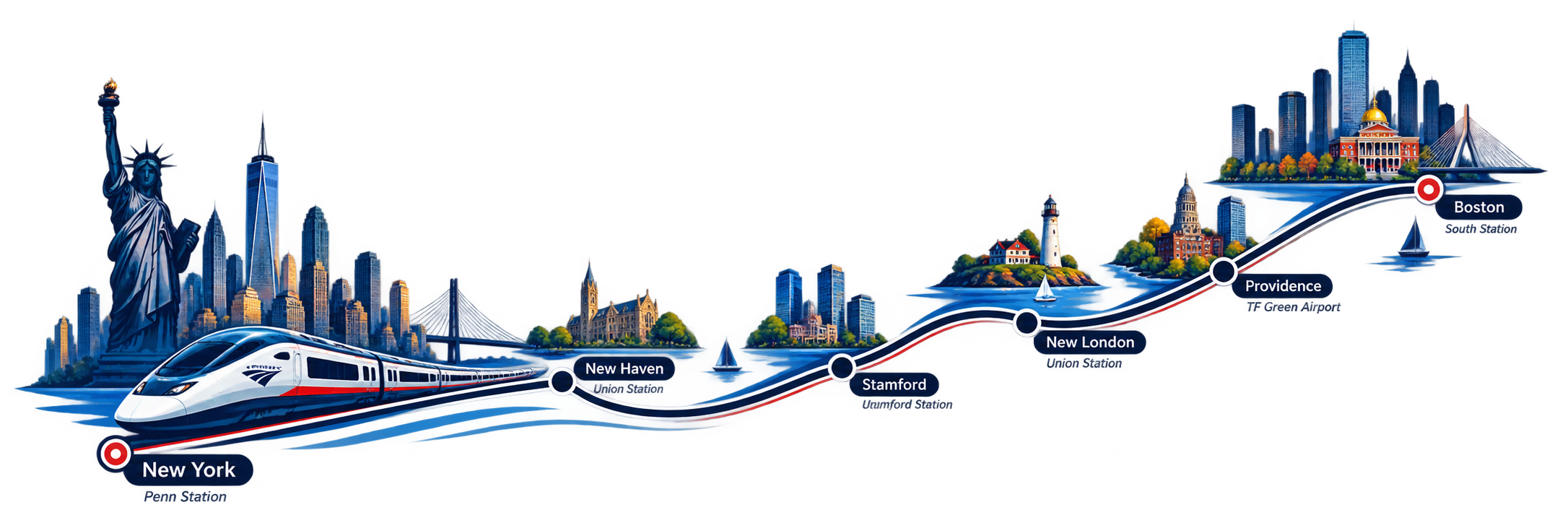
Every New York to Boston train — Acela and Northeast Regional alike — runs on the Northeast Corridor, tracing the Long Island Sound shoreline through Connecticut before cutting inland through Rhode Island and southern Massachusetts. It's not a straight line between the two cities; the coastal routing is why the rail distance (231 miles) runs longer than the point-to-point distance (190 miles).
Simplified route illustration, not to scale. Some Northeast Regional trains also call at additional intermediate stations not shown here, including Bridgeport, Old Saybrook, Mystic, Kingston and Route 128.
Three train types run the New York to Boston route. They cover the same track and stop at largely the same stations — the differences are speed, how many stops each makes, and what's included in the fare.
| Amtrak Acela | NextGen Acela | Amtrak Northeast Regional | |
|---|---|---|---|
| Travel time (NY–Boston) | ~3h 41m – 4h 30m | ~3h 46m | ~4h 11m |
| Fares from | ~$260 | ~$260 | ~$124 |
| Classes offered | Business, First (no Coach) | Business, First (no Coach) | Coach, Business |
| Seat configuration | Business: 2+2 · First: 1+2 | Business: 2+2 · First: 1+2 | Coach: 2+2 · Business: 2+2 |
| Seat assignment | Reserved in both classes | Reserved in both classes | Reserved in Business only; Coach unassigned |
| Legroom | Extra (Business) / most spacious (First) | Extra (Business) / most spacious (First) | Standard (Coach ~39″) / extra (Business ~42″) |
| Food & drink | Café car (Business); at-seat meals & complimentary drinks (First) | Café car (Business); at-seat meals & complimentary drinks (First) | Café car (Coach); complimentary non-alcoholic drinks (Business) |
| Boarding | Priority (First) | Priority (First) | Priority (Business) |
| Lounge access | Metropolitan Lounge (First, select stations) | Metropolitan Lounge (First, select stations) | Not included |
| Wi-Fi / power outlets | Yes | Yes | Yes |
| Overhead bins | Covered | Covered | Uncovered (Coach) |
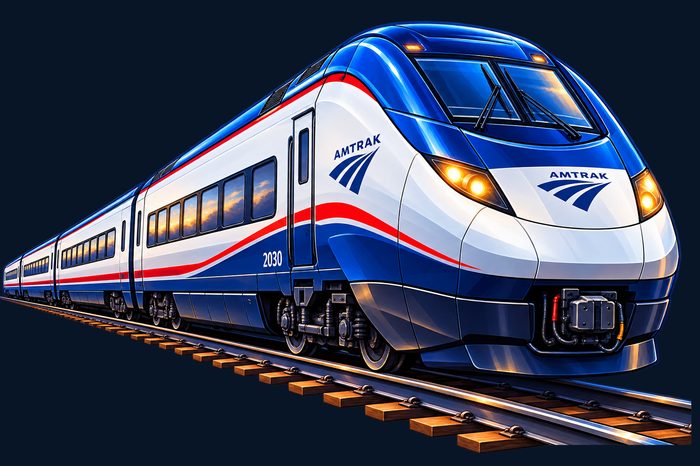
| Speed / tilt technology | Tilting trainset, top speed 150 mph | Newer Avelia Liberty trainset, top speed 160 mph | Standard Amfleet coaches, no tilt |
| Best for | Faster trip, willing to pay more | Newest equipment, similar price to classic Acela | Budget-conscious travelers, flexible on time |
The Northeast Regional makes more intermediate stops and runs at lower top speeds, which is why it takes roughly 30 minutes longer than Acela despite covering the same 231-mile route. Acela trades a higher fare for fewer stops, a quieter cabin and at-seat food service. NextGen Acela is Amtrak's newer trainset, gradually replacing older Acela equipment on this corridor; it runs a few minutes slower than the original Acela sets while that rollout is still underway, with fewer daily departures as of this writing.
Acela and NextGen Acela run two classes each (no Coach); the Northeast Regional runs two classes including standard economy.
All New York to Boston trains depart from Penn Station, at 8th Ave & 31st St in Midtown Manhattan. Connects directly to NYC Subway lines A/C/E, 1/2/3, and the Long Island Rail Road and NJ Transit.
A 10-minute walk from Penn Station, at 8th Ave & 42nd St. Not a train stop — listed here only as a reference point for travelers comparing bus and rail options.
The main terminus for most Northeast Regional and Acela trains, at Summer St & Atlantic Ave. Connects to the MBTA Red Line and Silver Line, plus regional and intercity buses.
Most trains also call here, in the Back Bay neighborhood near Copley Square. Connects to the MBTA Orange Line — often more convenient than South Station for hotels in the Back Bay or Fenway area.
Not served by Amtrak's New York trains — this is the MBTA/Commuter Rail terminal on the north side of downtown Boston, listed here to avoid confusion with South Station.
A suburban stop south of Boston in Westwood, MA, useful if your destination is the southern suburbs rather than downtown. Some but not all Northeast Regional and Acela trains call here.
Departures run from early morning to late evening: the first train of the day leaves New York Penn Station at 5:35a, and the last train departs at 9:40p. The table below groups typical departures by time of day — exact times shift by season and day of week, so treat this as a planning guide rather than a live timetable.
Tap a row for details. Times are a planning guide, not a live feed.
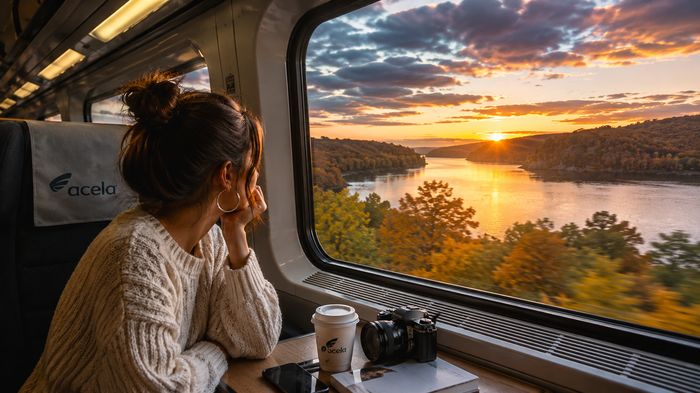
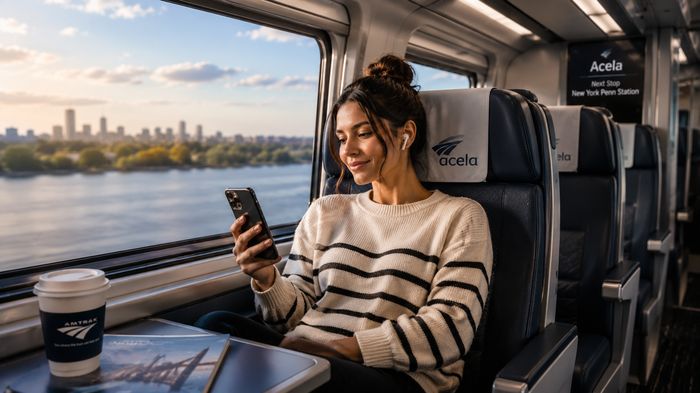
The New York to Boston train spends much of its journey close to the water — the Connecticut shoreline along Long Island Sound, then a shorter run through Rhode Island before turning inland to Boston.
The stretch between New Haven and New London runs directly along Long Island Sound, with picturesque landscapes and open water visible from the right-hand side of the train heading north. After New London the route cuts inland briefly before reaching Providence, then continues through suburban Massachusetts into Boston.
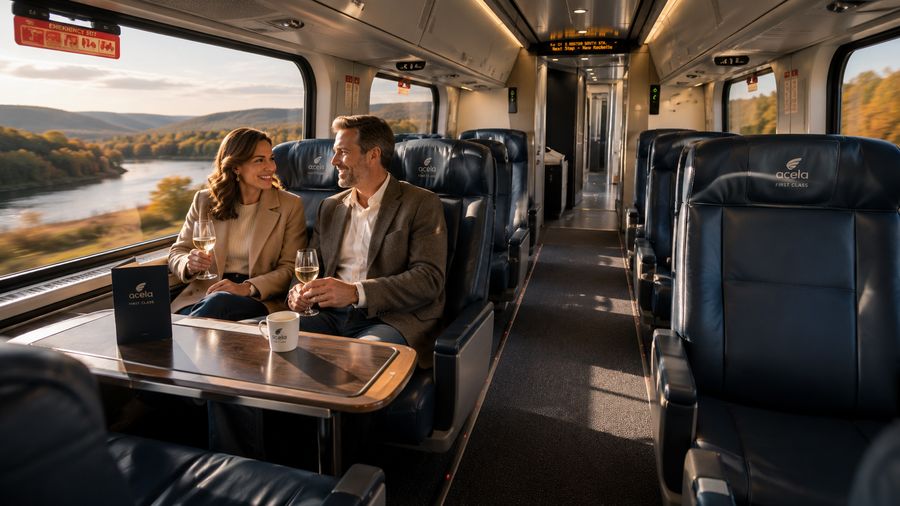
Northeast Regional offers Coach and Business class. Acela and NextGen Acela offer Business and First class, with First class including at-seat meal service. All classes have reclining seats in a 2x2 layout.
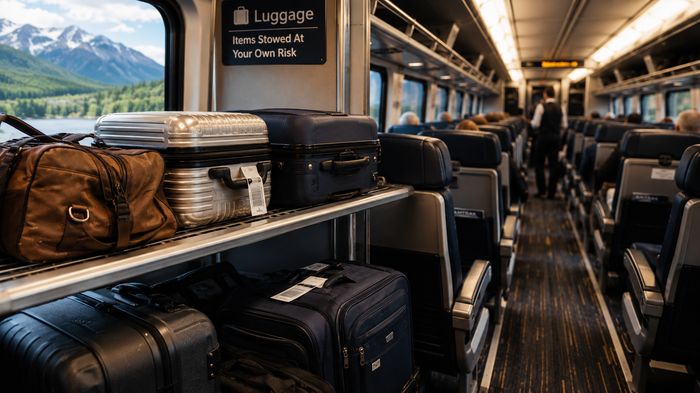
Two carry-on bags plus one personal item are included on all classes, with overhead racks and end-of-car space. Checked baggage is not available on this route — it's a carry-on-only corridor.
Free Wi-Fi and a power outlet at every seat are standard across Northeast Regional, Acela and NextGen Acela — there's no premium tier required to get either.
Once you arrive, both endpoints reward a little extra time. Boston's Freedom Trail links historic sites including the Old North Church, the Bunker Hill Monument, and Boston Common — the country's oldest public park — with easy access from South Station and Back Bay alike; both cities played a central role in the American Revolution. The Museum of Fine Arts and Fenway Park are short rides from downtown Boston, the Charlestown Navy Yard is home to the USS Constitution, and in winter, ice skating on the Common's Frog Pond is a popular stop.
Fares on this route are demand-based, similar to airline pricing: prices rise as a departure fills up and as the travel date gets closer. Booking a few weeks in advance on the Northeast Regional typically gets close to the lowest available fare, while walk-up tickets on a busy Friday evening can cost several times more. Amtrak offers several fare types across both popular trains on this corridor — Northeast Regional and Acela — and booking earlier is consistently the biggest lever for good money on a ticket: fares booked around 29 days ahead of departure have priced roughly $153.83 lower on average than walk-up tickets, and the very best fares tend to show up around 77 days before travel.
Class tier is the other main factor. Northeast Regional Coach is the cheapest way to make the trip; Business class adds a quieter car and extra legroom for a moderate premium. Acela and NextGen Acela cost more across the board, with First class the most expensive tier on the route — Acela tickets in particular carry the highest average fares of the three. Across all classes, average one-way ticket prices on this route run around $116, with fares as low as $22 on off-peak Northeast Regional departures and as high as $258 during November, historically the priciest month to travel; August has generally been the cheapest month, and Sunday departures tend to run less crowded than the rest of the week.
The train isn't the only way to cover this route. Here's how it stacks up against the main alternatives, without the sales pitch.
Several proposals aim to cut New York–Boston travel time well below today's 3h 41m fastest run. The most discussed is North Atlantic Rail, a privately backed plan for true high-speed track capable of roughly 200 mph, which would follow a more inland alignment through Hartford and Worcester rather than the current shoreline route. As of now these projects remain in planning and funding stages, with no construction timeline confirmed — today's Acela and Northeast Regional service, on the existing coastal route, is what's actually available to book.
Travel time depends on the train. Acela covers the route in about 3 hours 41 minutes, the newer NextGen Acela trainsets run around 3 hours 46 minutes, and the Northeast Regional takes about 4 hours 11 minutes. All three follow the same coastal route through Connecticut and Rhode Island, so the difference comes down to how many stops each train makes and its top speed on straighter sections of track.
The same schedules apply in both directions. Acela takes about 3 hours 41 minutes from Boston to New York, NextGen Acela about 3 hours 46 minutes, and the Northeast Regional about 4 hours 11 minutes.
Yes. Every Acela and Northeast Regional departure is a direct train between Boston (South Station or Back Bay) and New York (Penn Station) with no transfer required, roughly 19 combined scheduled departures a day in each direction.
Between 3 hours 41 minutes and 4 hours 30 minutes, depending on the specific train and how many intermediate stations it calls at along the way.
Yes. Amtrak operates frequent daily Acela and Northeast Regional service between Boston and New York on the Northeast Corridor, departing from South Station or Back Bay and arriving at Penn Station in Manhattan.
Northeast Regional fares typically start around $26 to $50 when booked in advance, with walk-up fares higher. Acela and NextGen Acela fares generally run higher, often $60 to $150 or more depending on how far ahead you book and the class of service.
Acela is Amtrak's premium, faster high speed train service on this route, with at-seat food service, quieter cabins, and fewer stops. The Northeast Regional is the standard service — slightly slower and with more stops, but generally the cheaper ticket. Both run the same New York–Boston route via New Haven, New London and Providence.
Counting both directions, Amtrak schedules around 33 trains a day on this corridor, departing roughly every hour to every couple of hours from early morning to evening. The average train journey runs about 4 hours 13 minutes end to end, and the longest scheduled trip takes up to 4 hours 35 minutes.
The fastest scheduled departure covers the trip in 3 hours 36 minutes. Acela is Amtrak's high speed train service and is generally the quickest option thanks to fewer stops, while Northeast Regional — a budget-friendly option that makes around 20 stops along the way — typically runs 4 hours 10 minutes to 4 hours 30 minutes. NextGen Acela trainsets operate on select departures within the Acela service.
Every Amtrak train on this route includes free Wi-Fi and a power outlet in every car, plus two free carry-on bags and one personal item per passenger. Business Class adds a complimentary non-alcoholic beverage over Coach, and First Class passengers on Acela get full at-seat meal service.
Trains depart from Penn Station in New York, NY — specifically the Moynihan Train Hall building — and arrive in Boston at either South Station or Back Bay Station, depending on the train. Both New York stations and Boston stations connect directly to local public transit.
Booking earlier generally means better ticket prices for cheap train tickets and the best deals on this route. Amtrak recommends booking several weeks ahead: fares booked around 29 days before departure have priced roughly $153.83 lower on average than walk-up tickets, and the lowest fares typically show up around 77 days out. Average one-way pricing runs about $116, with fares as low as $22 and as high as $258 during November, historically the highest average price of the year; August has generally been the cheapest month, and Sunday departures tend to be less crowded.
Yes. Train travel produces only about 0.1 to 0.3 kg of CO2 per passenger on this route, a smaller carbon footprint than flying and generally more eco-friendly than driving the same distance.